
The 7-day window is lying to you before noon
Meta's attribution window quietly rewrites yesterday's numbers for a week. Pausing a campaign on day-one data is the most expensive reflex in performance marketing — here's how to read a metric that isn't done yet.
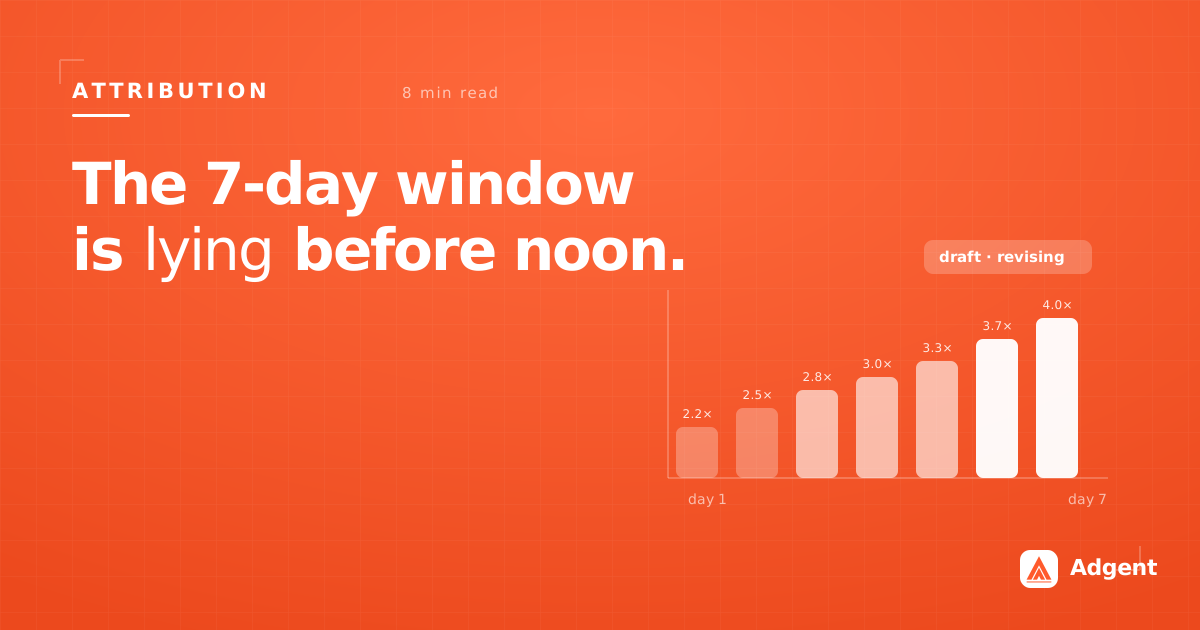
Meta ROAS looks worse in the morning because attribution isn't finished. Spend is already counted, but most of the conversions it earned haven't been credited yet — Meta's 7-day click window keeps attaching them for days. So you're dividing a complete cost by an incomplete revenue. The number reads pessimistic by construction, and almost always revises up.
Open Ads Manager at 9am and a campaign you launched yesterday shows a ROAS of 1.9×. The instinct is immediate and wrong: pause it, reallocate, move on. The problem is that 1.9× isn't a result. It's a snapshot of a number still being written.
Meta attributes conversions on a 7-day click, 1-day view basis by default. A purchase that happens today can be credited to an ad someone clicked six days ago. Which means the ROAS you read on day one is missing most of the conversions it will eventually earn. The figure doesn't just change — it almost always revises up.
Why the morning read is the worst read
Early in a metric's life, the denominator (spend) is complete but the numerator (attributed revenue) is not. You're dividing a finished number by an unfinished one. The result reads pessimistic by construction, and it reads most pessimistic first thing in the morning, before the day's conversions have landed.
A number inside the attribution window isn't a verdict. It's a question that hasn't finished being answered.
How to read a number that isn't done
You don't need to stop looking at fresh data. You need to stop trusting it like mature data. Three habits make the difference:
- Mark the window. Treat anything inside 7 days as provisional. Flag it visually so no one reacts to it as final.
- Compare like-aged data. Judge a day-1 read against other day-1 reads, not against a 30-day average that has fully matured.
- Wait for the floor, not the ceiling. Make kill decisions when a metric has stopped revising — usually day 3 to 4 — not on the first reading.
The exception that costs real money
Waiting isn't free. A genuinely broken campaign — wrong audience, broken landing page, creative that misses — burns budget every hour you give it the benefit of the doubt. The discipline isn't "never act early." It's knowing which signals mature and which don't.
Click-through rate, CPM, and cost per click are effectively final within hours. They don't wait on attribution. If CTR is a third of your account average on day one, that's a real signal and you can act on it. Revenue-side metrics — ROAS, CPA, conversion rate — are the ones still being written. Kill on the fast signals; wait on the slow ones.
This is exactly the kind of judgment Adgent encodes by default. Every number it reports carries its attribution maturity, and anything still inside the window is flagged rather than trusted. The brief never tells you to pause a campaign on a number that's going to revise up by noon.
What the 7-day window actually does to your numbers
The default setting on most Meta accounts is 7-day click, 1-day view. In plain terms: if someone clicks your ad and buys any time in the next week, that sale gets credited back to the ad — and back to the day the spend landed. That's why yesterday's ROAS keeps changing today, and the day after, and the day after that. You're not watching a stable number wobble; you're watching an incomplete number fill in.
The shape of that fill-in is predictable. On the accounts we watch, roughly half of a cohort's eventual conversions land in the first 24 hours, then the curve tapers — day two adds less, day three less again, until by day four or five the number has mostly stopped moving. Overlay that on the morning read and the effect compounds: at 9am you're not even seeing a full day-one figure, you're seeing the overnight slice of it. The denominator — spend — is already whole. The numerator is a few hours old. No wonder ROAS looks thin.
This is also why day-one comparisons across campaigns are treacherous. A campaign whose buyers convert fast will look like a hero at breakfast; one whose buyers deliberate for three days will look like a dog — and by Friday they can swap places entirely. The window doesn't just delay the number, it reorders your rankings while it settles.
Which metrics mature slowly — and which are already final
The trap isn't fresh data; it's treating every metric on the dashboard as if it matured at the same speed. It doesn't. Split your KPIs into two buckets and the morning stops lying to you.
- Effectively final within hours. CPM, CPC, click-through rate, hook rate, frequency, impressions. These are delivery metrics — they don't wait on a purchase to be attributed, so what you see in the morning is close to what you'll see at the end of the window.
- Still being written. ROAS, CPA, conversion rate, cost per purchase — anything with attributed revenue or conversions in it. These live inside the window and revise for days, almost always upward.
The rule that falls out of this is clean: kill on the fast signals, wait on the slow ones. If day-one CTR is a third of your account average, that's a real, mature signal — the creative isn't landing and you can act now. If day-one ROAS is a third of your account average, that's mostly the window talking, and pausing means you'll never see the conversions that were about to land. Whether you run CBO or ABO, Advantage+ or Performance Max, the maturity split is the same — the platform structure changes how budget flows, not how fast attribution settles.
How to decide before the window closes
Waiting a full seven days for certainty isn't a real option — a genuinely broken campaign burns budget every hour you give it the benefit of the doubt. The discipline is deciding on the right evidence early, not deciding blind. Three moves make that possible.
First, act on the mature metrics immediately. Broken landing page, mistargeted audience, a creative with a dead hook rate — these show up in delivery data that's already final on day one. You don't need attribution to catch them, and you shouldn't wait for it.
Second, compare like-aged data. Never judge a day-one read against a 30-day average that has fully matured. Line it up against other day-one reads — same campaign last week, or a sibling campaign at the same age. Same-age comparison strips the window out of the picture and shows you the real difference.
Third, wait for the floor, not the ceiling. Make your kill-or-scale call when a revenue metric has stopped revising — usually day three to four — rather than on the first reading. By then the curve has flattened enough that the number is close to true, and you've still acted well before the window formally closes. This is the same discipline that keeps a blended average from hiding a placement leak: the aggregate looks calm while the truth sits one layer down. If you want the mechanics of pulling those layers apart by hand, the Google Ads audit playbook walks the same read across search.
The discipline is simple to state and hard to hold under pressure: a number inside the window is a draft. Read it as one.
Holding the discipline is the hard part: a fresh number is a draft, and the pressure to act on it arrives long before the window closes. Adgent tracks how mature each metric is and says so plainly — flagging a read as still moving instead of ranking it as fact, and comparing campaigns at the same age rather than the same date. If you want to see which of your numbers have stopped revising and which are still drafts, request a demo — one real finding on your own account, before you change anything.
Frequently asked
Why does my Meta ROAS look low in the morning?
How long does Meta attribution take to settle?
Which metrics mature slowly and which are final?
Should I pause a campaign on day-one data?
What is the 7-day attribution window?
How do I decide before the window closes?
Adgent reads Meta and Google accounts overnight and hands you one brief each morning — the diagnosis, the evidence from your own account, and a change you approve before anything writes. Read-only by default. It analyzes creative; it doesn't make it.