
Frequency is a lagging indicator. Watch CPM.
Frequency tells you an audience has seen your ad too often. CPM tells you the auction already noticed. One of those is news; the other is a receipt.
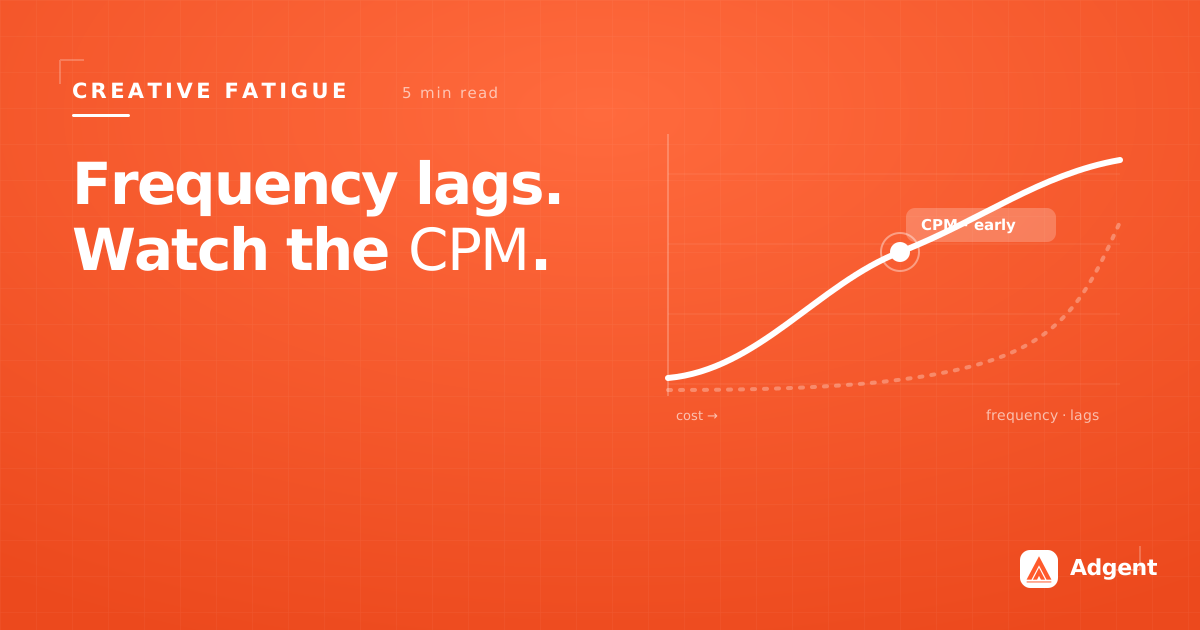
The earliest sign of creative fatigue is a rising CPM paired with a falling CTR — the auction repricing your ad within hours because engagement is decaying. It shows up days before a frequency average moves, because frequency is a slow, backward-looking summary and CPM is a live signal.
The standard fatigue check is frequency. Watch it climb past 2, past 3, and somewhere in there you refresh the creative. It's a reasonable habit built on a flawed instrument: frequency is an average, and it's slow.
Why frequency arrives late
Frequency is impressions divided by reach over a window. To move meaningfully, it needs volume to accumulate — which means by the time a 7-day frequency ticks from 2.1 to 2.8, the fatigue that caused it started days ago. You're reading a summary of last week's problem.
Worse, it averages over the whole audience. A frequency of 2.4 can mean everyone saw the ad twice, or it can mean your core 20% saw it nine times and the rest saw it once. Those are different problems and the metric can't tell them apart.
Frequency is the audience telling you it's tired. CPM is the auction telling you it already priced that in.
What the CPM curve knows first
Meta's auction is continuously repricing your ad against how people respond to it. As engagement decays, your effective quality signal drops and you pay more for the same placement. That repricing shows up in CPM within hours — long before enough impressions pile up to move a frequency average.
The diagnostic pattern to look for is CPM rising while CTR falls. Read them together:
- CPM up, CTR down — creative fatigue. The audience has stopped responding and the auction is charging you for it. Refresh.
- CPM up, CTR flat — auction pressure, not fatigue. A competitor moved in, or it's Black Friday. Your creative is fine; your market got expensive.
- CPM flat, CTR down — audience mismatch, usually after a targeting or placement change. The creative isn't tired, it's in the wrong room.
The read that's hard to do by hand
Notice that none of the three patterns above can be read from a single metric. Each one is a relationship between two curves, judged against what's normal for that account — and "normal" is different for a €5k/month DTC brand and a €500k/month retailer.
That's why fatigue is one of the first things Adgent looks for each morning. It tracks the CPM–CTR relationship per ad set against your account's own baseline, and when the pattern turns, it says so — in words, with the reason attached, before the frequency column has noticed anything is wrong.
Frequency isn't useless. It's just confirmation. By the time it agrees with you, you've already paid for the lesson.
What frequency number actually signals fatigue
People want a threshold, so here's the honest version: there isn't one that holds across accounts. A prospecting audience of two million cold users can run at a frequency of 4 or 5 for weeks without fatigue, because the impressions are spread thin across a huge pool. A retargeting audience of eight thousand warm users can be cooked at a frequency of 2 — they've all seen the ad twice in three days, and the auction knows it before the average does.
That's the trap in the "refresh at frequency 3" rule of thumb. The same number means burnout on one ad set and plenty of runway on another. What matters isn't the absolute frequency, it's the rate of change against that ad set's own baseline — and whether CPM is climbing while response falls. A frequency of 3.5 that's been stable for two weeks with flat CPM is fine. A frequency of 2.2 that jumped from 1.6 in four days while CPM ticked up is the one to worry about.
There's no universal fatigue frequency. There's only your ad set's normal, and the moment CPM starts pulling away from it.
Fatigue vs. auction pressure: don't refresh the wrong thing
The most expensive mistake here isn't missing fatigue — it's misreading a cost spike as fatigue when it's really the auction getting crowded. If you swap out a perfectly good creative because CPM jumped over Black Friday, you've thrown away a proven asset and reset the learning phase for nothing. The tell is CTR. Fatigue means the audience stopped responding, so CTR falls with CPM. Auction pressure means the market got expensive while your audience still likes the ad, so CTR holds steady even as CPM climbs.
This is the same class of problem behind a CPA that jumps overnight — the number moved, but the number alone doesn't tell you which lever to pull. Read CPM in isolation and every cost spike looks like fatigue. Read it against CTR, seasonality, and what competitors are doing in your placements, and the three causes separate cleanly. Only one of them is fixed by new creative.
How often you should actually refresh
Refresh on the signal, not the calendar. A fixed cadence — "new creative every two weeks" — either churns out winners before they've peaked or lets losers rot past the point of profit, because ad sets don't fatigue on a schedule. The right cadence is whatever your CPM–CTR relationship tells you, and that varies with audience size, budget, and how distinctive the creative is. A high-budget ad set pounding a small retargeting pool needs new frames far more often than a lean prospecting campaign against a broad Advantage+ audience.
What you can standardize is the pipeline, not the timer: always have the next variation ready so that when the signal turns, you swap without going dark. Keep a small stable of proven angles in rotation so no single execution carries the whole ad set. And when you do scale a winner, watch the fatigue curve steepen — bigger budgets burn a fixed audience faster, which is exactly the failure mode covered in scaling a winner without breaking it.
Why this is hard to do by eye, every morning
Everything above is readable in principle. The problem is doing it across dozens of ad sets, every day, before the spend compounds. You'd have to hold each ad set's CPM and CTR against its own trailing baseline, separate a fatigue slope from an auction spike from a targeting miss, and do it fast enough to act while the creative still has salvageable reach. By hand that's an hour of squinting at exports — and it's the hour most teams skip until the CPA report forces it.
That's why fatigue detection is one of the first reads Adgent does each morning. It tracks the CPM–CTR relationship per ad set against your account's own normal, tells fatigue apart from auction pressure and targeting drift, and writes the verdict in words with the reason attached — before the frequency column has noticed anything is wrong. You approve the refresh; it just makes sure you see the signal on day one instead of in next week's receipt.
Reading the CPM–CTR relationship per ad set against its own trailing baseline is an hour of squinting at exports, and it is the hour most teams skip until the CPA report forces it. Adgent runs that read every morning, separates fatigue from auction pressure and targeting drift, and writes the verdict in words with the reason attached. It analyzes creative; it doesn’t make it. If you want to see which of your ads is tiring while the reach is still salvageable, request a demo — one real finding on your own account, before you change anything.
Frequently asked
What is the earliest signal of creative fatigue?
Why watch CPM instead of frequency?
How do I tell fatigue from auction pressure?
What frequency means creative fatigue?
How often should I refresh creative?
Does rising CPM always mean fatigue?
Adgent reads Meta and Google accounts overnight and hands you one brief each morning — the diagnosis, the evidence from your own account, and a change you approve before anything writes. Read-only by default. It analyzes creative; it doesn't make it.