
Why Adgent leads with the verdict
A dashboard is a filing cabinet that renders. It shows you everything and concludes nothing. Every Adgent brief inverts that: the verdict first, the evidence underneath, and nothing you didn't need.
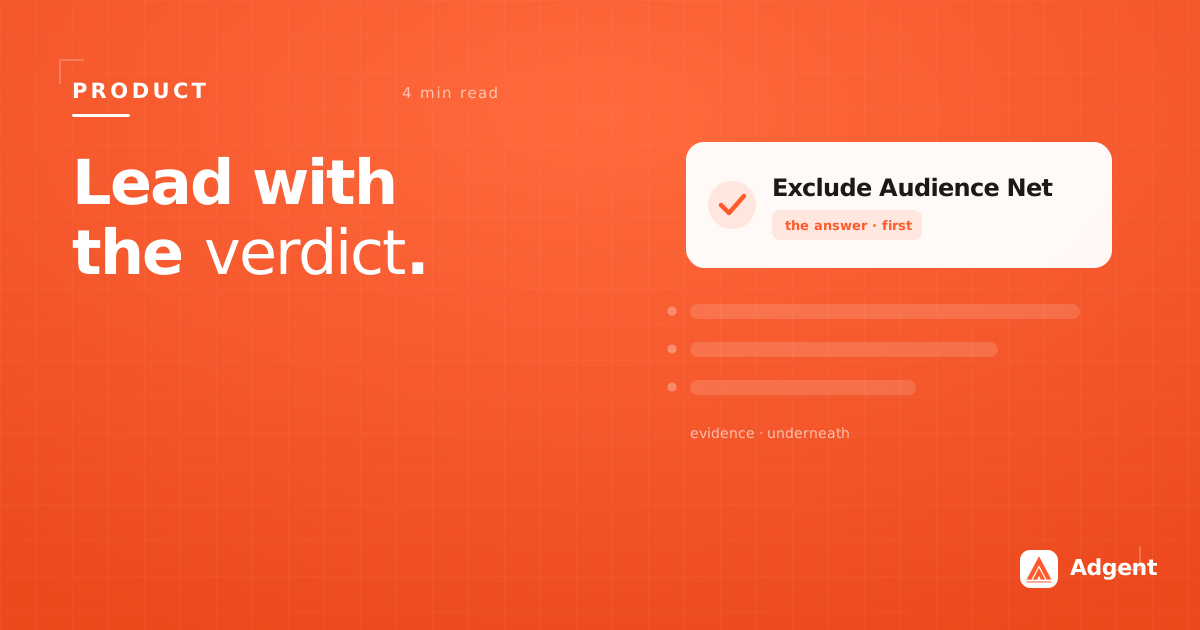
An analytics tool should lead with a conclusion because the marketer isn't short of data — they're short of the sentence that says what the data means. A verdict ranks issues by impact, discards noise, and commits to a view, turning a filing cabinet into a decision. The evidence still sits underneath.
Most reporting tools solve a problem nobody has. Performance marketers are not short of data — they're drowning in it. The scarce thing was never the metric. It's the sentence that tells you what the metric means.
The filing cabinet that renders
A dashboard is a neutral surface. It presents forty numbers with equal weight and equal confidence, and quietly hands the entire analytical burden back to you. Which of these moved? Which of those movements matter? Which is noise, which is a trend, which is an attribution artifact that will correct itself by Thursday?
The tool doesn't know. It was never built to know. It renders your data faithfully and leaves you exactly where you started — except now you've spent twenty minutes looking at it.
A dashboard hands you data. It never hands you a decision. The gap between those two things is a person's whole morning.
What a senior analyst does differently
Give the same account to a good analyst and you don't get forty numbers back. You get a paragraph: "Prospecting is fine, don't touch it. The retargeting set is bleeding — CPM's up 40% and the creative's nine days old. I'd swap it today. Everything else can wait."
That paragraph is doing three things a dashboard cannot: it ranks by impact, it discards what doesn't matter, and it commits to a view. It's a shorter output that took more thinking, not less.
The principle, stated plainly
So every Adgent brief is built to the same shape:
- The verdict first. One line, in plain language, that answers "what should I do about my account today?" before any chart appears.
- The evidence underneath. The numbers that support the verdict, in the order that matters — not the order the API returned them.
- Nothing you didn't need. If a metric didn't change the conclusion, it doesn't earn a place in the brief. It's still there if you ask. It just isn't in your way.
The hardest part of that list is the third one. Leaving things out requires being right about what matters, and every tool that has ever hedged by showing you everything did it to avoid that responsibility.
Why this is a product decision, not a styling one
Leading with the verdict forces the system to actually have one. You can't rank by impact without a model of what impact means for this account. You can't discard the irrelevant without knowing what's relevant to this brand. You can't commit to a view without carrying the reasoning that produced it — and being willing to show it when asked.
That's the whole bet: the format isn't a presentation layer over a dashboard. It's the shape of the thinking, made visible. A tool that leads with the verdict has to earn the verdict first.
You already know what your numbers are. The question worth answering is what they mean — and that's the only question we're interested in.
Verdict-first is not the same as hiding the data
The most common objection to leading with a conclusion is that it feels like it takes something away. If the tool decides what matters, doesn't that strip you of the raw numbers you're used to scanning? It's a fair worry, and the answer is no — because verdict-first is an ordering, not a subtraction. Every figure that produced the conclusion is still there, one layer down, in the order that supports the argument rather than the order the API happened to return it.
What changes is the default. A dashboard defaults to everything, all at once, equal weight — and asks you to do the ranking. A verdict-first brief defaults to the one thing that matters, stated plainly — and lets you open the drawer when you want the rest. If Meta ROAS is flat and healthy, you don't need to see forty rows of Meta breakdowns to confirm it; the verdict says "Meta's fine, leave it," and the evidence is a click away if you doubt it. The data isn't gone. It's just no longer standing between you and the decision.
That distinction matters because trust in an analyst — human or machine — is built on being able to check the work. A verdict you can't audit is just an opinion. So the discipline isn't "show less"; it's "lead with the conclusion, and make the evidence for it reachable in one move." That's the same read-only, evidence-first posture we describe in what an AI media buyer actually is: judgment on top, the numbers that justify it underneath, nothing hidden.
How this differs from a dashboard, concretely
It's easy to say "we're not a dashboard" and mean nothing by it. So here's the concrete difference, in the terms a media buyer lives in. A dashboard shows you that CPM rose 40% on a retargeting set. It will happily show you that number next to thirty-nine others, all rendered with the same font and the same confidence. What it will never do is tell you that a 40% CPM rise on a nine-day-old creative is fatigue, not auction pressure — and that the fix is a creative swap, today, not a bid change.
A dashboard also can't tell you when not to act. A number sitting inside its attribution window looks like a signal but isn't one yet; a blended ROAS can hide a placement leak that only shows up when you split Advantage+ placements from manual ones. A dashboard renders all of these faithfully and flags none of them. The verdict-first shape forces the opposite behavior: because the tool has to commit to "do this" or "don't touch it," it has to reason about whether the number is even trustworthy before it speaks. The conclusion carries a confidence, and the confidence is part of the output.
That's the real line between the two. A dashboard is a surface you interrogate. A verdict-first brief is a colleague who has already interrogated it for you — and who tells you, out loud, when the data isn't good enough to conclude anything at all.
What makes a good ad-account brief
If the verdict is the product, then the quality of the brief is everything. A good ad-account brief has a recognizable shape, and it's worth naming what separates one from a prettier dashboard. First, it ranks by impact: the thing that will move the account most is the thing you read first, whether that's a bleeding retargeting set on Meta or a Performance Max campaign quietly absorbing budget on Google. Second, it states its confidence: "this is fatigue, high confidence" reads differently from "CPA moved, but we're still inside the attribution window — wait a day," and a good brief never collapses those two into the same flat number.
Third, a good brief proposes a specific next action, not a vague direction. "Retargeting CPM is up" is a symptom. "Swap the retargeting creative today — it's nine days old and fatiguing" is a brief. The difference is whether you can act on it without doing the analysis yourself. Fourth, and hardest, it leaves things out. Whether the account runs CBO or ABO, Advantage+ or manual placements, most of what a dashboard would show you didn't change the conclusion — so it doesn't earn a place in the brief. It's still there if you ask. It just isn't in your way.
Put those four together and you have the standard every Adgent brief is measured against: ranked, confident, specific, and ruthless about what to omit. It's the same discipline a senior buyer applies when they glance at an account and say one sentence instead of forty. The format doesn't make the thinking look smarter — it forces the thinking to actually happen. If you want to see what that brief would say about a real account, request a demo.
Frequently asked
Why lead with the verdict instead of data?
What does verdict-first mean?
How is this different from a dashboard?
Why show evidence underneath?
Does verdict-first hide the data?
What makes a good ad-account brief?
Adgent reads Meta and Google accounts overnight and hands you one brief each morning — the diagnosis, the evidence from your own account, and a change you approve before anything writes. Read-only by default. It analyzes creative; it doesn't make it.