
Meta vs Google Ads: which platform for your first $10k?
It's not the fight you think. Google Ads captures demand that already exists; Meta creates demand that doesn't. Which you start with comes down to one question — do people already search for what you sell?
It's demand-capture vs demand-generation. Google Ads captures intent people already have — they're searching for what you sell. Meta creates intent by interrupting people who weren't looking. Most brands eventually need both, but start with Google if there's real search volume for your product, and Meta if you're introducing something nobody knows to search for.
"Meta or Google?" is the first budget question every new advertiser asks, and it's usually framed as a duel — as if one platform is simply better and the other is the runner-up. That framing is wrong, and it quietly wastes a lot of first-$10k budgets. Meta and Google aren't two teams playing the same game. They play different games entirely, and the one you should start with depends on your product, not on which platform has the better reputation this quarter.
The one distinction that decides everything
Here's the split that matters more than any CPM chart: demand-capture versus demand-generation.
Google Ads is demand-capture. When someone types "best running shoes for flat feet," they've already decided they want running shoes — you're just competing to be the answer. The intent is baked in before your ad ever loads. Your job is to show up and not fumble it.
Meta is demand-generation. Nobody opens Instagram to buy your product. You interrupt them mid-scroll and manufacture the want on the spot. There's no pre-existing intent to capture, so your creative has to do the work of creating it.
Google catches the hand already reaching for the shelf. Meta puts the product in front of a hand that wasn't reaching for anything.
Everything else — cost, creative load, how hard the platform is to measure — flows from that one difference. So before you compare a single number, ask the only question that matters: do people already search for what I sell? If yes, there's captured demand waiting on Google. If no, you'll have to generate it on Meta.
Google Ads vs Meta Ads, side by side
Here's the honest comparison across the five dimensions that actually change your outcome. Neither column is the "winner" — each is better at a different job.
| What matters | Google Ads (demand-capture) | Meta Ads (demand-generation) |
|---|---|---|
| Intent type | Existing — people already searching | Created — interrupts the scroll |
| Best for | Products people search for by name or need | Visual, impulse, or new-to-market products |
| Typical CAC pattern | Lower early on warm search intent; CPCs climb in competitive categories | Higher until creative clicks, then scales further and cheaper |
| Creative demand | Low — a plain text ad on the right keyword converts | High — weak creative gets punished fast |
| Measurement difficulty | Moderate — last-click flatters search unfairly | Hard — view-through and 7-day windows over-credit Meta |
Read the table as two jobs, not two rivals — the right first dollar depends on which job your product needs done.
Google Ads: capturing the demand that's already there
Google's advantage is that it doesn't have to convince anyone the problem exists. Someone searching "emergency plumber near me" or "CRM for small agencies" has already self-identified as a buyer. You're one click from a warm lead. That's why Google is usually the shorter path to a first sale, and why a first-time advertiser can get a plain search campaign profitable faster than a first Meta creative.
The honest downsides: on high-intent commercial keywords in competitive categories, cost per click can be brutal — you're bidding against everyone else who wants that same warm buyer. And Google's automated products can drift. Performance Max in particular will happily spend your budget across placements you can't see, crediting itself for conversions that would have happened anyway. Google's last-click default also over-credits search: it takes the final touch and ignores that Meta may have created the awareness that led to the search in the first place.
Start on Google when: people search for your category by name; your product solves an urgent or well-defined problem; or you're a local or considered-purchase business where intent is explicit.
Meta Ads: manufacturing demand that wasn't there
Meta's superpower is reach into people who've never heard of you. If your product is visual, impulse-friendly, or genuinely new — the kind of thing nobody would think to search for — Meta is where you build the want from scratch. Done well, it scales further than Google because the addressable audience isn't capped by search volume. There are only so many people searching for your keyword each month; there's no such ceiling on the scroll.
The honest downsides: Meta lives and dies on creative. A weak ad burns budget fast, and the platform punishes fatigue — what worked last month stops working, and you're back to producing more. Advantage+ automates a lot, but it's optimizing toward Meta's auction, not your margin. And Meta's measurement is the hardest to trust: view-through attribution and generous 7-day windows mean the platform routinely claims credit for sales it merely witnessed. A reported ROAS of 4.2x on Meta is not the same 4.2x you'd get anywhere else.
Start on Meta when: nobody searches for what you sell yet; your product is visual or impulse-driven; or you're building a brand and need awareness before intent can exist.
The trap: those two ROAS numbers don't compare
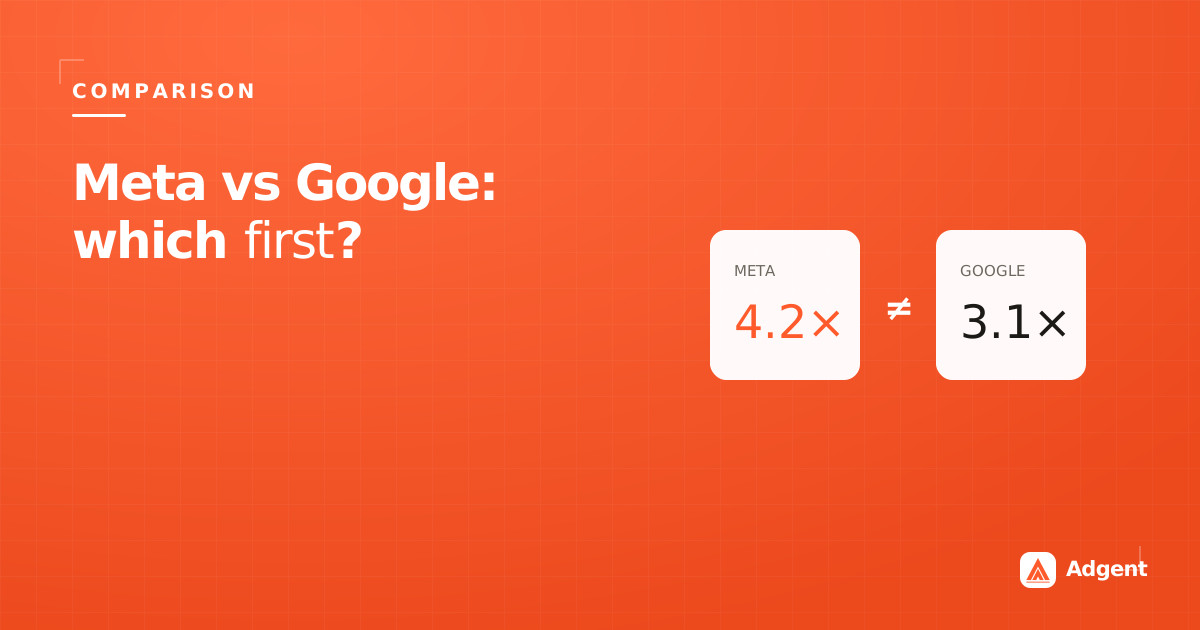
Here's where most "Meta vs Google" decisions go wrong. You run both for a month, pull the dashboards, and see Meta reporting 4.2x while Google reports 3.1x. Obvious call, right? Cut Google, double down on Meta.
Except the two numbers were never measured the same way. Meta counts a 7-day-click, 1-day-view window and claims view-through conversions; Google counts last-click on its own window. They frequently double-count the same sale — Meta created the awareness, the person searched, Google closed it, and both platforms bill you for the win. Stacking those raw figures against each other is comparing two different rulers and trusting the one with the friendlier markings.
Before you reallocate a dollar based on platform-reported ROAS, read why Meta and Google ROAS aren't directly comparable — it's the single most expensive mistake in this whole decision. The only fix is reconciling both back to real revenue in GA4 or your store, so you know which platform actually earned the conversion instead of which one shouted loudest about it.
So which do you start with?
Skip the platform loyalty and run the product through this:
- Do people search for it? If there's real search volume for your category, start with Google — you're capturing demand that already exists, which is cheaper and faster to convert.
- Is it visual or impulse? If the product sells on sight and nobody's searching for it, start with Meta — the feed is built to sell things people didn't set out to buy.
- Are you a beginner? Google search is more forgiving — the intent does half the work, and a plain ad on the right keyword can convert without a studio's worth of creative.
- Genuinely can't tell? Default to Google for the first $10k. Warm intent is the easier thing to learn on, and the lessons transfer.
Then, once the first channel is stable and profitable, add the second — because the real endgame is both. Meta generates the awareness that becomes tomorrow's branded searches; Google captures the intent Meta warmed up. They compound. But compounding is a phase-two problem. On your first $10k, pick the one your product needs and prove it works before you split your attention.
The measurement problem underneath all of this
Whichever you start with, the hard part isn't launching — it's knowing what actually worked. Both platforms grade their own homework, and both grade generously. This is exactly the mess an AI analyst is built to untangle: reading both accounts as one book, reconciling reported numbers against real revenue, and telling you which platform earned the sale rather than which one claimed it. That's what an AI media buyer does that a dashboard can't.
If you want to see what an honest read of your Meta and Google accounts looks like — the numbers reconciled, the double-counting stripped out — request a demo. You'll see the two platforms on the same ruler — before you change anything.
Frequently asked
Should I start with Meta or Google Ads?
Is Google Ads better than Meta?
Can you compare Meta and Google ROAS?
Which is cheaper, Meta or Google?
Do I need both Meta and Google Ads?
Which is better for ecommerce?
Which is easier for beginners?
Adgent reads Meta and Google accounts overnight and hands you one brief each morning — the diagnosis, the evidence from your own account, and a change you approve before anything writes. Read-only by default. It analyzes creative; it doesn't make it.