
The Meta Ads account audit: a 20-point checklist
Most Meta audits are a screenshot tour of the dashboard. This one is ordered differently: the checks that recover spend first, ranked by impact — and the signal check that has to come before all of them, because a broken pixel makes every other number a guess.
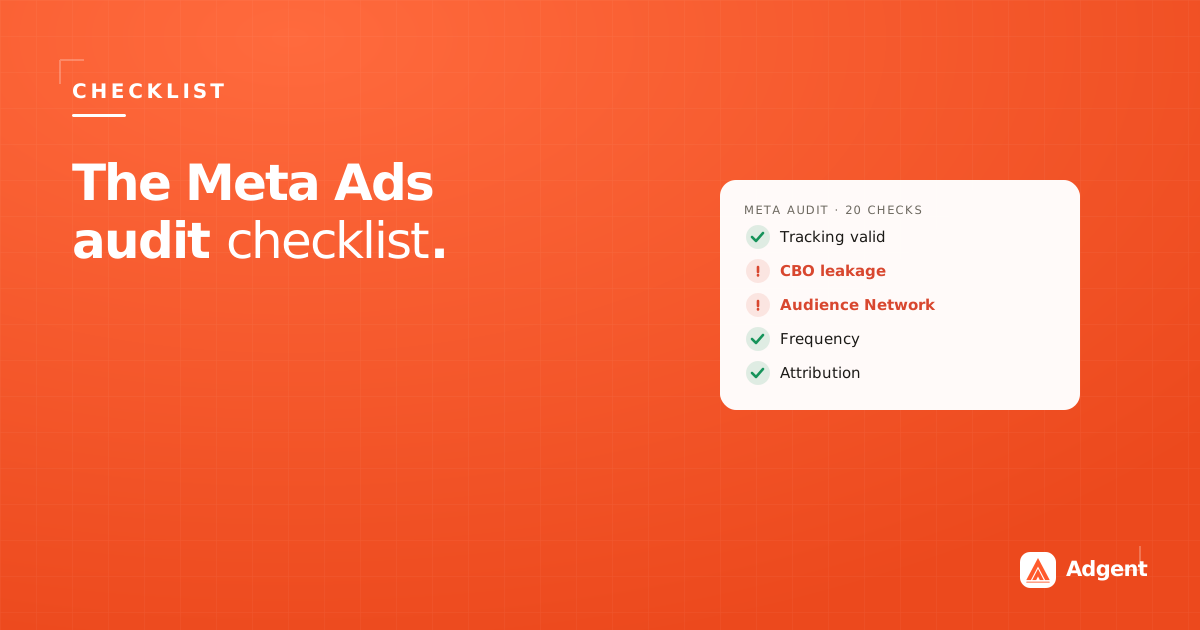
To audit a Meta Ads account, work in order of recoverable spend — and verify the signal first. Confirm pixel and Conversions API health before you judge a single campaign, because a broken signal corrupts everything downstream. Then check attribution, CBO leakage, Audience Network placement drift, frequency and creative fatigue. Attach a dollar figure to each finding and fix the biggest leak first.
A Meta Ads audit is supposed to answer one question: where is this account leaking money, and what's the cheapest thing to fix first? Yet most audits bury that answer under a screenshot tour of Ads Manager. So here's the version that leads with impact — the checks that actually recover spend, in the order a senior buyer runs them. It's the Meta twin of how to audit a Google Ads account; same discipline, different platform.
Start with the signal you can't trust
Before you judge a single ad set, judge the measurement. On Meta more than anywhere, the number you're optimizing toward is only as good as the pixel and Conversions API feeding it. A mis-configured event, a browser pixel firing without a CAPI match, a purchase event that double-counts — any of these makes ROAS and CPA read like fiction, and no amount of budget tuning fixes a broken signal.
An audit that trusts a broken pixel just optimizes the account deeper into the wrong thing.
So the first check isn't performance — it's whether performance is even measurable. Open Events Manager, confirm events fire once per action, check event match quality, and make sure the browser pixel and CAPI events deduplicate on a shared event ID. This is the same discipline behind leading with the verdict: say what you can stand behind, flag what you can't, and never manufacture confidence.
The 20-point Meta audit, ranked by recoverable spend
Ten families of check, ordered so the money moves first and the hygiene comes last. Each is a place spend hides on Meta specifically:
- Pixel & Conversions API health. Events firing once, with the right value, on the right action? Confirm browser and CAPI events deduplicate, and check event match quality against Meta's Conversions API setup. A broken signal corrupts every optimization downstream.
- Attribution setting. Is the account on 7-day click, or the default 7-day click / 1-day view? Ad sets judged on different windows aren't comparable, and view-through credit inflates the wrong winners.
- CBO budget leakage. Under Campaign Budget Optimization, Meta pools the budget and often starves a proven ad set to feed a cheaper-but-worse one. Check where the money actually landed versus where the conversions did.
- Audience Network placement drift. Spend quietly drifts to Audience Network and Reels at a fraction of feed performance — the Meta twin of the placement drift that hides inside a blended average.
- Frequency & creative fatigue. Rising frequency with climbing CPM is the account telling you the creative is spent — CPM is the early creative-fatigue signal, well before ROAS drops.
- Audience overlap. Ad sets bidding against each other in the same auction drive up your own CPMs. Run the overlap tool on your prospecting sets.
- Retargeting exclusions. Are purchasers and recent converters excluded from prospecting and retargeting? Missing exclusions mean you're paying full CPA to re-buy customers you already own.
- Catalog & feed health. For commerce accounts, a stale or partially rejected catalog silently caps Advantage+ Shopping reach. Check feed freshness, rejection rate and required fields.
- Learning-phase status. Ad sets stuck in learning — or endlessly re-entering it after edits — never stabilize. Count how many are learning-limited and why.
- Ad-account structure. Too many overlapping ad sets fragment the signal below the conversion volume Meta needs to learn. Consolidation is often free performance.
Rank, don't just list
The difference between a useful audit and a report nobody acts on is ordering. Every finding should carry an estimate of recoverable spend so the account owner knows what to do Monday morning — not a flat list where a €10,000/month leak sits next to a cosmetic naming warning.
- Attach a number to each finding. "Audience Network drift: ~€6,000/mo" beats "review placements."
- Sequence the fixes. Editing an ad set can reset the learning phase; order changes so you don't undo one fix with the next.
- Make every figure verifiable. Each number should link back to where to confirm it in Ads Manager. Trust is the whole point.
Red flags: what a broken account looks like
Some findings you have to calculate. Others you can spot in thirty seconds — the tells that an account has been left on autopilot. If you see any of these, you've found recoverable spend before you've done a single sum.
- Frequency above 5 on a prospecting audience. A cold audience seeing the same ad five-plus times in a week is fatigued and getting more expensive to reach. Rising frequency with climbing CPM is the clearest early fatigue tell there is — act before ROAS confirms it.
- No retargeting exclusions. If purchasers and recent converters aren't excluded from prospecting, you're paying full CPA to re-serve ads to people who already bought. On accounts with a healthy return rate, that's spend re-buying customers you already own.
- A backend-vs-Ads-Manager revenue gap wider than roughly 10–15% — our working threshold. When Ads Manager claims €40,000 in sales and Shopify or GA4 sees €30,000, someone is optimizing on a number that isn't real. A gap past roughly 10–15% means your pixel and CAPI setup is the first thing to fix, not your bids.
- Audience Network eating a big share of a placement-optimized budget. When automatic placements let Audience Network absorb a large slice of spend at a fraction of feed performance, the blended ROAS looks fine while the leak sits hidden inside the average.
- Ad sets still in the learning phase after five days. Learning-limited ad sets never stabilize — usually because the conversion volume is too low or edits keep restarting the clock. If half the account is perpetually learning, the structure is fragmenting the signal.
- One giant CBO campaign with every audience inside it. Pooling prospecting, retargeting and lookalikes under one budget lets Meta chase the cheapest conversions — usually warm retargeting — and take credit for demand you'd have captured anyway.
- Default attribution, and nobody knows which window. An account reported on 7-day click / 1-day view while the team quotes numbers as if they were click-only is comparing ad sets that were never on the same footing.
Manual audit vs. continuous audit
The format of the audit decides what it can actually catch. A human running this checklist once a quarter and software reading the account through the API every morning are looking for the same leaks — but they see very different amounts of them.
| Manual audit | Automated / continuous audit | |
|---|---|---|
| Time to run | A few hours to a full day per account | Minutes — and it re-runs on its own |
| Frequency | Quarterly, if you're disciplined | Every morning |
| Coverage | What the auditor has time to sample | Every ad set, placement and creative |
| Catches drift | No — it's a snapshot that ages fast | Yes — flags what changed since yesterday |
| Best at | Judgment calls, strategy, creative direction | High-drift leaks: placements, frequency, CBO pacing |
| Cost | typically low four figures for a one-off agency audit | Software fee, then near-zero per re-run |
Neither wins outright. A manual audit brings judgment a script can't; a continuous one catches the leaks that reopen the week after a manual audit ships. The strongest setup is a standing analyst for the high-drift checks and a human for the strategy calls — which is exactly what an AI media buyer is built to be.
How often should you audit?
Audit cadence should match how fast each check goes stale. Some things barely move; others rot within a week. A single quarterly review treats them all the same, which is why so many Meta audits feel out of date the moment they land.
- Full audit — quarterly. The complete 20-point pass: signal integrity, attribution, structure, catalog. These are slow-moving and worth a deep, unhurried look four times a year.
- Light review — monthly. A focused pass on budget pacing, frequency and the ad sets that shifted most. Thirty minutes to catch anything the quarter would let drift too far.
- Continuous — for the high-drift checks. Placement drift, frequency, audience overlap and CBO leakage move week to week. These want monitoring, not scheduling — the moment they slip, spend leaks, and a quarterly cadence means you find out 89 days late.
Common mistakes that break a Meta audit
Even a disciplined auditor can run the whole checklist and still reach the wrong conclusion — usually by trusting a number they shouldn't, or judging one on the wrong timeframe.
- Judging performance inside the attribution window. Recent numbers are still settling — a campaign read on day-one data looks pessimistic and gets paused before it's had a chance to report.
- Trusting Ads Manager revenue as ground truth. Platform-reported ROAS isn't the backend. Reconcile to Shopify or GA4 before you shift a single budget.
- Reading blended ROAS and stopping there. A healthy average can hide a placement or audience that's bleeding — the leak lives in the split, not the sum.
- Editing ad sets mid-audit. Every meaningful edit can reset the learning phase, so a flurry of "fixes" can leave the account worse than you found it. Sequence, don't spray.
The real fix is a standing audit
The catch with a one-off Meta audit is that accounts drift. Frequency climbs daily, placements re-leak, creative fatigues, CBO re-pools the budget overnight. A PDF from last quarter describes an account that no longer exists. The real fix isn't a better template — it's a standing analyst that re-audits continuously and flags what changed.
That's what Adgent does for Meta and Google as one account: it runs these checks every morning, ranks findings by recoverable spend, and prepares the fix for your approval — read-only until you say go. If you want to see it against a real account, request a demo — one real finding on your own account, before you change anything.
Frequently asked
How do I audit a Meta/Facebook ads account?
How often should I audit Meta ads?
What are the red flags in a Meta ads account?
How do I check if my pixel is working?
What attribution setting should I use?
Can AI audit Meta ads?
How long does a Meta audit take?
Adgent reads Meta and Google accounts overnight and hands you one brief each morning — the diagnosis, the evidence from your own account, and a change you approve before anything writes. Read-only by default. It analyzes creative; it doesn't make it.