
How to choose an AI media buying tool
"AI ad tool" describes four different products solving four different problems. This is a neutral map of the categories — creative generation, bid automation, analysis and diagnostics, and DSPs — and a framework for picking the one that fixes your actual bottleneck.
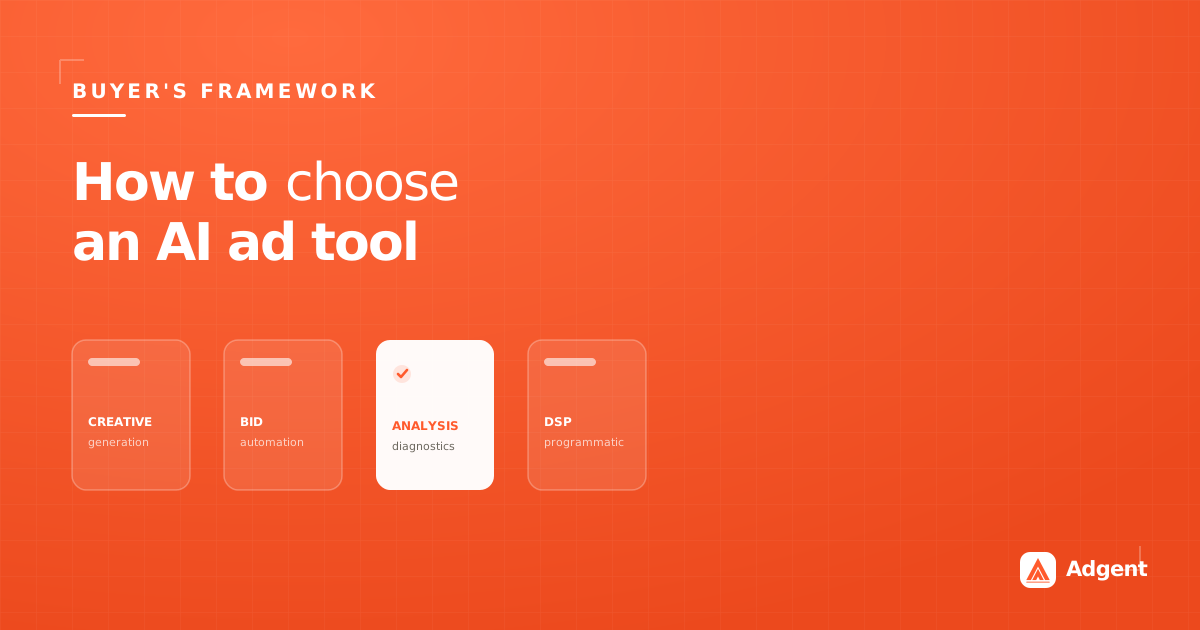
There is no single "best" AI media buying tool, because AI ad tools split into four categories — creative generation, bid automation, analysis and diagnostics, and programmatic buying (DSPs). The right one is the one that matches your bottleneck: need more ads, pick generation; can't tell why a metric moved, pick analysis and diagnostics; buying display or CTV at scale, pick a DSP. And remember the bid AI is likely already running for free inside Meta and Google.
Search for the "best AI media buyer tool" and you'll get a list that mixes ad-copy generators, automated bidding bots, reporting dashboards and enterprise programmatic platforms as if they were rivals. They aren't. They're four different products aimed at four different jobs, and a ranked list that pretends they compete tells you nothing about which one you should buy. So before the shortlist, the map.
The four categories of AI ad tools
Almost every tool marketed as "AI for media buying" fits one of these buckets. Knowing the bucket tells you what the tool is actually for.
1. Creative generation
Creative-generation tools make the assets: ad copy, image and video variations, hooks and headlines at volume. The pitch is speed — turn one concept into forty variants and let testing sort them. This is where tools like Meta's own Advantage+ creative, and general models such as ChatGPT or Midjourney (used for ad output) live. You want this category when your constraint is producing enough creative to test, not understanding what's already running.
2. Bid and budget automation
These act on the auction — setting bids, shifting budget, expanding audiences toward a target ROAS or CPA. The crucial thing to know: you almost certainly already own the best of these. Meta's Advantage+ and Google's Performance Max are AI bid-automation tools that ship inside the platforms for free. Third-party rules engines add cross-platform triggers on top. Buy into this category deliberately, because a standalone bidding tool often duplicates what the platforms do natively.
3. Analysis and diagnostics
These read the account and explain it — why ROAS moved, where spend leaks, which placement is dragging the average, whether the tracking can be trusted at all. They don't generate ads and they don't buy inventory; they turn a wall of metrics into a ranked verdict. This is the category the platform AI leaves wide open: Advantage+ optimizes the auction but won't tell you why it's underperforming. Tools here range from BI-style dashboards and attribution suites to AI analysts that reason across platforms — Adgent sits in this row, alongside the category, as an overnight read of each account that ranks findings by recoverable spend. Reach for analysis and diagnostics when your bottleneck is understanding, not making or buying.
4. DSPs (demand-side platforms)
These are programmatic-buying infrastructure — DV360, The Trade Desk, Amazon DSP — that bid on inventory across display, video and connected-TV exchanges in real time. The AI here is in the bidding algorithms and inventory selection. This is a different sport from managing Meta and Google campaigns: DSPs are about reach and buying at scale across the open web. You want one when you're buying programmatic inventory, not when you're optimizing social and search accounts.
The question isn't which tool is best. It's which of the four jobs is the one slowing you down.
A comparison by capability
Here's the same four categories read across the jobs that matter — so you can see at a glance what each does and, just as usefully, what it doesn't.
| Capability | Creative generation |
Bid automation |
Analysis & diagnostics |
DSP programmatic |
|---|---|---|---|---|
| Produces ad variations | ✓ | — | — | — |
| Sets bids & budgets | — | ✓ | drafts | ✓ |
| Explains why a metric moved | — | — | ✓ | — |
| Reads Meta + Google as one | — | some | ✓ | — |
| Buys open-web / CTV inventory | — | — | — | ✓ |
| Flags wasted spend & tracking gaps | — | partial | ✓ | — |
| Already inside Meta/Google for free | partly | ✓ | — | — |
Read down the highlighted column and the analysis row does the thing the others can't: tell you why, on every account you connect, and what to do about it. It sits on top of the platform bid AI, not against it.
A decision framework: if you need X, look for Y
Skip the ranked lists. Start from what's actually slowing you down, and the category picks itself.
- If you can't make enough creative to test → a generation tool. Your constraint is output volume, and this is the one category that adds it.
- If you want the auction managed automatically → first check what Advantage+ and Performance Max already do. A third-party bid-automation tool only earns its price if it adds cross-platform logic the platforms can't.
- If you drown in reports and can't tell why numbers moved → an analysis and diagnostics tool. This is the most common real bottleneck, and the one the platform AI leaves unsolved.
- If you're buying display, video or CTV at scale → a DSP. Nothing in the other three categories buys open-web inventory.
- If you're an agency stretched thin across many accounts → an analysis layer that reads each client nightly and hands each one a ranked brief. The auction is already automated per platform; the scarce resource is senior attention, and that's what this scales.
Four things to check on any tool
Whichever category you land in, four questions cut through the marketing. First: does it duplicate the platform AI you already have? A lot of "AI media buying" is a paid wrapper over bidding Meta and Google do for free. Second: what's the access model? A tool that writes to your live account on its own is a different risk profile from one that reads, drafts and waits for your approval. On live spend, read-only-by-default with approval-gated execution is the safer design — see what AI can and can't run on an account for why the last click is worth keeping human.
The last two are harder to fake in a demo, which is exactly why they're worth asking.
Does it ever decline what you asked for — and show you the account's own numbers as the reason?
Ask for something the account can't support: a target CPA well below anything it has ever produced, a conversion campaign on an event that barely fires. A tool that reasons will push back and show its work — your history at this stage sits here, your target sits there, and here is the gap. A tool that only executes will build it, cheerfully, and let you find out in four weeks. The reason matters as much as the refusal: "not recommended" with no numbers behind it is a shrug, not an analysis. Run this test in the demo, on a real account, and watch whether anything ever comes back as no.
Does it tell you the account isn't ready before you spend, or after?
Every account has preconditions — enough conversion volume for the optimizer to learn from, tracking that isn't broken, a signal that maps to something the business actually sells. A tool that checks those first will sometimes tell you the setup is technically possible but the learning signal isn't there yet, and name the fix. A tool that checks them afterwards reports the same fact as a performance problem a month later, once the budget has already taught the algorithm nothing. Same finding, very different price. Ask which one you're buying.
Where Adgent fits
To be plain about our own place on this map: Adgent is an analysis, diagnostics and approval-gated execution tool — an AI analyst, not a creative generator or a DSP. It reads Meta and Google as one account overnight, pulls GA4 and Search Console in for context, and hands you one brief per account ranked by recoverable spend. It's read-only by default; every change is drafted for your approval, and nothing writes to a live account on its own. It doesn't replace the categories above — you'll still want creative tools and you'll still run the platforms' bid AI. It fills the row those leave open: telling you why, on each account, and what to do next.
So: which AI media buying tool is best? The one that fixes your bottleneck. Map your constraint to a category, check it isn't reselling the platform AI, check the access model, and buy that layer. If your constraint is understanding — why performance moved and where the spend leaks — request a demo and see what it finds in your own account — one real finding, before you change anything.
Frequently asked
What is the best AI media buyer tool?
What are the best AI tools for performance marketers?
What's the best AI tool for a media buying agency?
Does the AI already inside Meta and Google count as an AI media buying tool?
Should an AI media buying tool make changes to my account automatically?
What's the difference between a DSP and an AI media buyer?
How do I choose between all the AI ad tools?
Adgent reads Meta and Google accounts overnight and hands you one brief each morning — the diagnosis, the evidence from your own account, and a change you approve before anything writes. Read-only by default. It analyzes creative; it doesn't make it. If you want the same four categories compared row by row, including where we are the wrong tool, that is Why Adgent.